For the second World Cup in a row, Uruguay go home after the group stage. Last time it was on goals scored and with a sense of what might have been, but there was nothing to mitigate this campaign. The second-half performance against Saudi Arabia offered an idea of how they might have played, but this was a tournament characterised by ill feeling between coach and players, and undermined by individual errors.
It ended disgracefully with a terrible foul by Agustín Canobbio for which he was rightly sent off. Even his wild-eyed fury, though, signalled in two altercations with the referee in the minutes immediately before his inexcusable lunge on Pau Cubarsí, could not displace Fernando Muslera’s despairing glance behind him as the ball dribbled inside his right-hand post as the image of Uruguay’s World Cup.
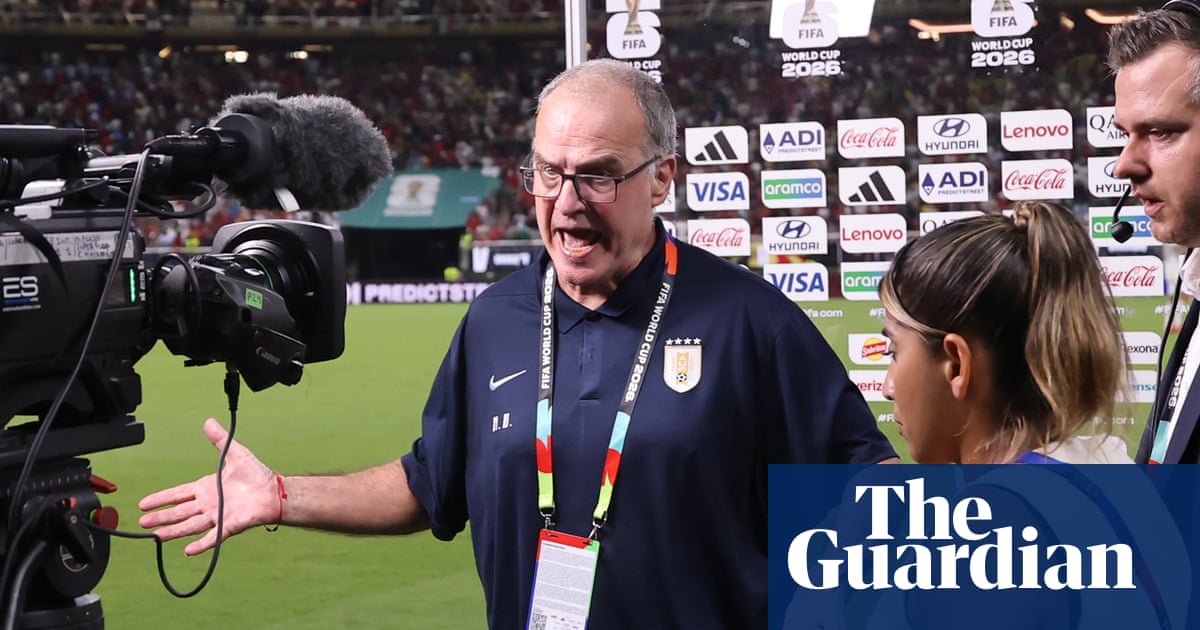
Marcelo Bielsa leaves his job as manager amid acrimony and intense disappointment. He is 70 and, while it’s hard to imagine him leaving football, the likelihood is that that is the last we see of him at a World Cup. Like his first campaign, with Argentina in 2002, it ended in frustration, third place in the group and a first-phase exit. Leeds may turn out to have been his last positive experience in management. He has been a brilliant coach, one of the most influential of the past three or four decades, but the light fades for everybody eventually.
And yet Uruguay had played relatively well until Muslera’s mistake, restricting Spain even if they didn’t offer much threat of their own; too often they took the wrong option, or the vital pass was misplaced. But the real issue was the individual errors. Uruguay let in four goals in the tournament and all stemmed from basic mistakes. Muslera spilled a header against Saudi Arabia. The wall parted like a pair of curtains to allow Cape Verde to take the lead from a long-range free-kick, and then a misplaced pass when Muslera was inexplicably positioned 10 yards outside his box cost them an equaliser.
Muslera asked to be withdrawn at half-time here and was replaced by Sergio Rochet but the horse had long since bolted. Whatever wider issues there are, Bielsa’s decision to bring back Muslera, who had lost his place to Rochet before the 2022 World Cup and announced his retirement from international football in 2024, stands as a terrible mistake. Rochet had kept clean sheets in his three games before being dropped; there was no pressing need to remove him.
But there are wider issues. Part of the problem is that this is not a great Uruguay squad, not by the standards of the 1920s, the late-40s and early-50s, or even a decade ago. There is no Luis Suárez, no Diego Forlán, no Edinson Cavani – although it’s worth asking why none of the side that won the Under-20 World Cup three years ago has graduated to the senior team. That decline is never an easy thing to accept, even if on some rational level it is obvious – and so the tendency is to scapegoat the manager. And Bielsa has made it easy to scapegoat him.
His record at World Cups is poor. His Argentina went out in the group stage of the 2002 World Cup. His Chile may have won hearts and minds in 2010, but they went out in the last 16. His Uruguay couldn’t beat Saudi Arabia or Cape Verde and slunk away in a storm of spite and ill-discipline.
Four senior Uruguay players – Rochet, Manuel Ugarte, Rodrigo Bentancur and Federico Valverde – had requested a meeting with Bielsa before Friday’s game to protest about training, which they said was so ferocious it has led to injuries. They also suggested a change of approach against Spain, playing in a low block and looking to counter. That, of course, is utterly antithetical to Bielsa who not only denied their request but called a team meeting at which he addressed the players for 48 minutes, telling them that he intended to mirror Spain and explaining why he had brought injured but loyal players to the World Cup.
Bielsa also accused the squad of having tried to get rid of him when Suárez retired with a tirade against him almost two years ago, and again when he left the versatile and experienced Nahitan Nández, who plays in the Saudi Pro League with Al-Qadsiah, out of the World Cup squad. Suárez’s departure, notably, came after the Copa América in 2024; the month with Bielsa seemingly having strained his relations with everybody. Being cooped up with somebody so intense, so idiosyncratic, for a month cannot be easy; what can be tolerated at club level, when players can leave the training ground and decompress with friends and family, is perhaps harder to tolerate within the confines of a tournament camp.
After 40 minutes of an eyes-down harangue, several players walked out, despite the attempts of the defender José María Giménez to persuade them not to. The Barcelona defender Ronald Araújo, who did not play in either of the first two games, summed up the mood: “God willing we advance from the group,” he said, “but this can’t be endured any longer.”
To the relief of almost everybody, nobody will have to. Bielsa holds a major place in tactical history and, when the immediate memories fade, his legacy is secure. But for him and for Uruguay, this has been a dreadful tournament.
It ended disgracefully with a terrible foul by Agustín Canobbio for which he was rightly sent off. Even his wild-eyed fury, though, signalled in two altercations with the referee in the minutes immediately before his inexcusable lunge on Pau Cubarsí, could not displace Fernando Muslera’s despairing glance behind him as the ball dribbled inside his right-hand post as the image of Uruguay’s World Cup.
Marcelo Bielsa leaves his job as manager amid acrimony and intense disappointment. He is 70 and, while it’s hard to imagine him leaving football, the likelihood is that that is the last we see of him at a World Cup. Like his first campaign, with Argentina in 2002, it ended in frustration, third place in the group and a first-phase exit. Leeds may turn out to have been his last positive experience in management. He has been a brilliant coach, one of the most influential of the past three or four decades, but the light fades for everybody eventually.
And yet Uruguay had played relatively well until Muslera’s mistake, restricting Spain even if they didn’t offer much threat of their own; too often they took the wrong option, or the vital pass was misplaced. But the real issue was the individual errors. Uruguay let in four goals in the tournament and all stemmed from basic mistakes. Muslera spilled a header against Saudi Arabia. The wall parted like a pair of curtains to allow Cape Verde to take the lead from a long-range free-kick, and then a misplaced pass when Muslera was inexplicably positioned 10 yards outside his box cost them an equaliser.
Muslera asked to be withdrawn at half-time here and was replaced by Sergio Rochet but the horse had long since bolted. Whatever wider issues there are, Bielsa’s decision to bring back Muslera, who had lost his place to Rochet before the 2022 World Cup and announced his retirement from international football in 2024, stands as a terrible mistake. Rochet had kept clean sheets in his three games before being dropped; there was no pressing need to remove him.
But there are wider issues. Part of the problem is that this is not a great Uruguay squad, not by the standards of the 1920s, the late-40s and early-50s, or even a decade ago. There is no Luis Suárez, no Diego Forlán, no Edinson Cavani – although it’s worth asking why none of the side that won the Under-20 World Cup three years ago has graduated to the senior team. That decline is never an easy thing to accept, even if on some rational level it is obvious – and so the tendency is to scapegoat the manager. And Bielsa has made it easy to scapegoat him.
His record at World Cups is poor. His Argentina went out in the group stage of the 2002 World Cup. His Chile may have won hearts and minds in 2010, but they went out in the last 16. His Uruguay couldn’t beat Saudi Arabia or Cape Verde and slunk away in a storm of spite and ill-discipline.
Four senior Uruguay players – Rochet, Manuel Ugarte, Rodrigo Bentancur and Federico Valverde – had requested a meeting with Bielsa before Friday’s game to protest about training, which they said was so ferocious it has led to injuries. They also suggested a change of approach against Spain, playing in a low block and looking to counter. That, of course, is utterly antithetical to Bielsa who not only denied their request but called a team meeting at which he addressed the players for 48 minutes, telling them that he intended to mirror Spain and explaining why he had brought injured but loyal players to the World Cup.
Bielsa also accused the squad of having tried to get rid of him when Suárez retired with a tirade against him almost two years ago, and again when he left the versatile and experienced Nahitan Nández, who plays in the Saudi Pro League with Al-Qadsiah, out of the World Cup squad. Suárez’s departure, notably, came after the Copa América in 2024; the month with Bielsa seemingly having strained his relations with everybody. Being cooped up with somebody so intense, so idiosyncratic, for a month cannot be easy; what can be tolerated at club level, when players can leave the training ground and decompress with friends and family, is perhaps harder to tolerate within the confines of a tournament camp.
After 40 minutes of an eyes-down harangue, several players walked out, despite the attempts of the defender José María Giménez to persuade them not to. The Barcelona defender Ronald Araújo, who did not play in either of the first two games, summed up the mood: “God willing we advance from the group,” he said, “but this can’t be endured any longer.”
To the relief of almost everybody, nobody will have to. Bielsa holds a major place in tactical history and, when the immediate memories fade, his legacy is secure. But for him and for Uruguay, this has been a dreadful tournament.