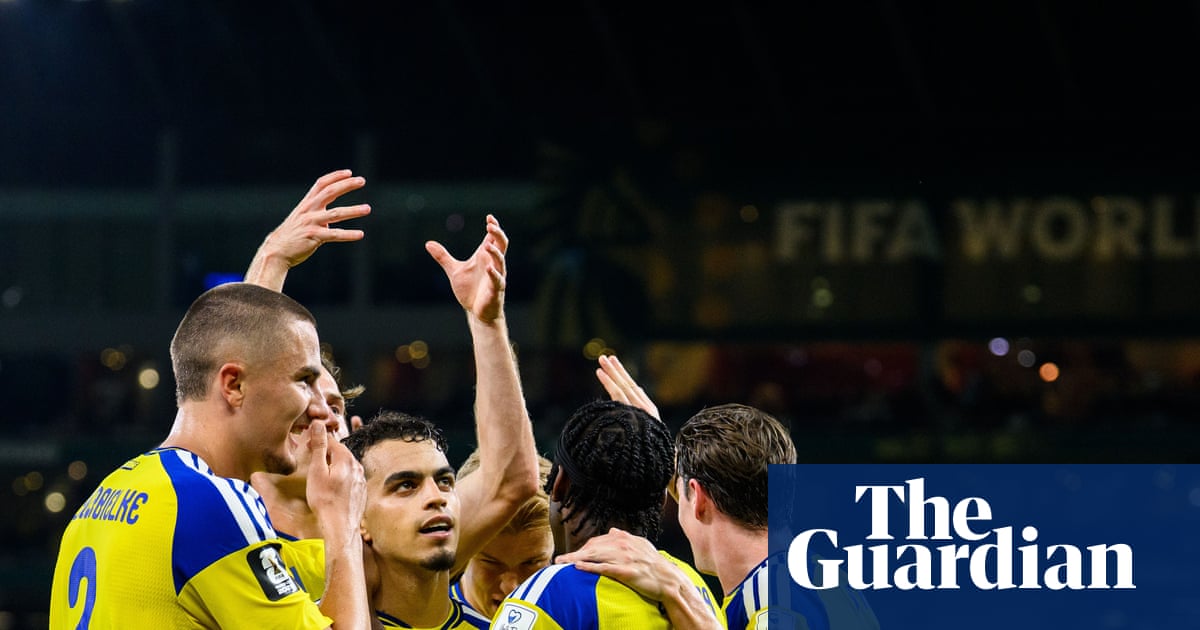
When they picture a messiah, few perhaps imagine a mild-mannered 51-year-old with a greying beard who used to play at left-back for York City. Certainly Chelsea and West Ham fans don’t. But the degree to which Graham Potter is loved in Sweden has to be seen to be believed. He was a down-on-his-luck manager seeking a new start; they were a country who didn’t win a single game in World Cup qualifying. And somehow they were perfect for each other. By the standards of what Potter has achieved over the past nine months, a comfortable win over a self-destructive Tunisia barely registers, but it is the continuation of a remarkable process of renewal.
Sweden were awful in qualifying. They had a lot of injuries, it’s true, but two defeats to both Switzerland and Kosovo and two draws against Slovenia are not usually a route to the World Cup. Jon Dahl Tomasson was sacked as coach and Potter brought in. Sweden’s Nations League performances offered a repechage chance in the playoffs, and they took full advantage, beating Ukraine and Poland to secure their place at the finals. Potter described the latter victory, secured with an 89th-minute Viktor Gyökeres goal, as his best night in football. Sunday night was part of his reward.
“Great night, great start,” said Potter, who was bleeding from an ear injury he was unable to explain. “It was a solid team performance that allowed Alex [Isak] and Viktor to show their quality. They haven’t played that much together and they’ve had to work in training and in bits, and they needed a team to function behind them.”
The clouds sat low over the Sierra Madre Occidental, infusing the atmosphere with an oppressive dampness. It was 27C at kick-off and sticky, and probably deeply unpleasant to play in. The hydration breaks for once were probably justified, but it’s indicative of how they’ve become emblematic of Fifa’s greed that they were booed by a substantial proportion of fans. They were, though, soon placated by an exuberantly moustachioed man in a Stetson playing a jaunty accordion, so nobody perhaps should expect the revolution just yet.
Tunisia were also no longer led by the coach with whom they began qualifying. Or indeed the coach who ended qualifying. Or any of the three in between. Underwhelming performances at the Africa Cup of Nations led to Sami Trabelsi being replaced as Tunisia manager by Sabri Lamouchi, once of Nottingham Forest and Cardiff City. He made significant changes, calling up 11 players who had not been involved in Morocco. Of those, five made the starting lineup.
One was the goalkeeper Abdelmouhib Chamakh, who bore substantial responsibility for Sweden’s first two goals. Six minutes in, he was tentative in dealing with Victor Lindelöf’s ball over the top and patted the ball tamely down. Gyökeres seized on it and, when his shot was blocked, it rebounded to Brighton’s Yasin Ayari who smashed it back past Chamakh. Ayari was born in Stockholm to a Tunisian father, who encouraged him to hold out for a Sweden call-up when Tunisia tried to select him in 2021.
The Club Africain keeper was even more at fault for the second. Gyökeres was again instrumental, receiving the ball in the centre-circle as Sweden broke, and turning it round the corner for Isak who cut inside and struck a low shot goalwards. It wasn’t the most ferocious strike but the ball skidded through the arms of Chamakh. He may have been partially unsighted, but the way he dropped his head suggested he knew what a mess he’d made of what should have been a routine save. “There were several individual mistakes, too many of them, and you can’t recover from that,” said Lamouchi. “The competition does not forgive.”
Lamouchi did at least seem to have tackled the chronic fear that has undermined Tunisian football for decades. Perhaps the fact they went behind so early had something to do with it, but they did not seek to kill play from the off, spoiling and wasting time. There was some creative endeavour, an actual attempt to play the game. Given how things panned out, that may have been a mistake.
It was, at least, one of Lamouchi’s selection who offered some sign of resistance shortly before the break, Omar Rekik glancing in Hannibal Mejbri’s right-wing cross. For a quarter of an hour at the beginning of the second half, it seemed possible Tunisia might come back into it. But their implosion had another chapter left to be told. Ellyes Skhiri demanded the ball from Chamakh and decided, inexplicably, to wander towards Isak.
The Liverpool forward tackled him and the ball broke to Gyökeres, who capped an influential night with an emphatic finish. An unmarked Mattias Svanberg swept in a fourth moments after coming off the bench as a feather of a touch from Isak played him onside, and Ayari thumped his second of the night to make it five in injury time.
There had been a sense in the 3-2 playoff win over Poland that Sweden’s goals had not really had much to do with the play but had just sort of materialised. Here, at least, it was obvious where they came from: Tunisia errors. At some point they might have to create a goal by themselves but, for now, they’re just enjoying the improbable bonus of being at the World Cup. Six months ago, it really didn’t seem plausible. The Potter miracle goes on.
Sweden were awful in qualifying. They had a lot of injuries, it’s true, but two defeats to both Switzerland and Kosovo and two draws against Slovenia are not usually a route to the World Cup. Jon Dahl Tomasson was sacked as coach and Potter brought in. Sweden’s Nations League performances offered a repechage chance in the playoffs, and they took full advantage, beating Ukraine and Poland to secure their place at the finals. Potter described the latter victory, secured with an 89th-minute Viktor Gyökeres goal, as his best night in football. Sunday night was part of his reward.
“Great night, great start,” said Potter, who was bleeding from an ear injury he was unable to explain. “It was a solid team performance that allowed Alex [Isak] and Viktor to show their quality. They haven’t played that much together and they’ve had to work in training and in bits, and they needed a team to function behind them.”
The clouds sat low over the Sierra Madre Occidental, infusing the atmosphere with an oppressive dampness. It was 27C at kick-off and sticky, and probably deeply unpleasant to play in. The hydration breaks for once were probably justified, but it’s indicative of how they’ve become emblematic of Fifa’s greed that they were booed by a substantial proportion of fans. They were, though, soon placated by an exuberantly moustachioed man in a Stetson playing a jaunty accordion, so nobody perhaps should expect the revolution just yet.
Tunisia were also no longer led by the coach with whom they began qualifying. Or indeed the coach who ended qualifying. Or any of the three in between. Underwhelming performances at the Africa Cup of Nations led to Sami Trabelsi being replaced as Tunisia manager by Sabri Lamouchi, once of Nottingham Forest and Cardiff City. He made significant changes, calling up 11 players who had not been involved in Morocco. Of those, five made the starting lineup.
One was the goalkeeper Abdelmouhib Chamakh, who bore substantial responsibility for Sweden’s first two goals. Six minutes in, he was tentative in dealing with Victor Lindelöf’s ball over the top and patted the ball tamely down. Gyökeres seized on it and, when his shot was blocked, it rebounded to Brighton’s Yasin Ayari who smashed it back past Chamakh. Ayari was born in Stockholm to a Tunisian father, who encouraged him to hold out for a Sweden call-up when Tunisia tried to select him in 2021.
The Club Africain keeper was even more at fault for the second. Gyökeres was again instrumental, receiving the ball in the centre-circle as Sweden broke, and turning it round the corner for Isak who cut inside and struck a low shot goalwards. It wasn’t the most ferocious strike but the ball skidded through the arms of Chamakh. He may have been partially unsighted, but the way he dropped his head suggested he knew what a mess he’d made of what should have been a routine save. “There were several individual mistakes, too many of them, and you can’t recover from that,” said Lamouchi. “The competition does not forgive.”
Lamouchi did at least seem to have tackled the chronic fear that has undermined Tunisian football for decades. Perhaps the fact they went behind so early had something to do with it, but they did not seek to kill play from the off, spoiling and wasting time. There was some creative endeavour, an actual attempt to play the game. Given how things panned out, that may have been a mistake.
It was, at least, one of Lamouchi’s selection who offered some sign of resistance shortly before the break, Omar Rekik glancing in Hannibal Mejbri’s right-wing cross. For a quarter of an hour at the beginning of the second half, it seemed possible Tunisia might come back into it. But their implosion had another chapter left to be told. Ellyes Skhiri demanded the ball from Chamakh and decided, inexplicably, to wander towards Isak.
The Liverpool forward tackled him and the ball broke to Gyökeres, who capped an influential night with an emphatic finish. An unmarked Mattias Svanberg swept in a fourth moments after coming off the bench as a feather of a touch from Isak played him onside, and Ayari thumped his second of the night to make it five in injury time.
There had been a sense in the 3-2 playoff win over Poland that Sweden’s goals had not really had much to do with the play but had just sort of materialised. Here, at least, it was obvious where they came from: Tunisia errors. At some point they might have to create a goal by themselves but, for now, they’re just enjoying the improbable bonus of being at the World Cup. Six months ago, it really didn’t seem plausible. The Potter miracle goes on.