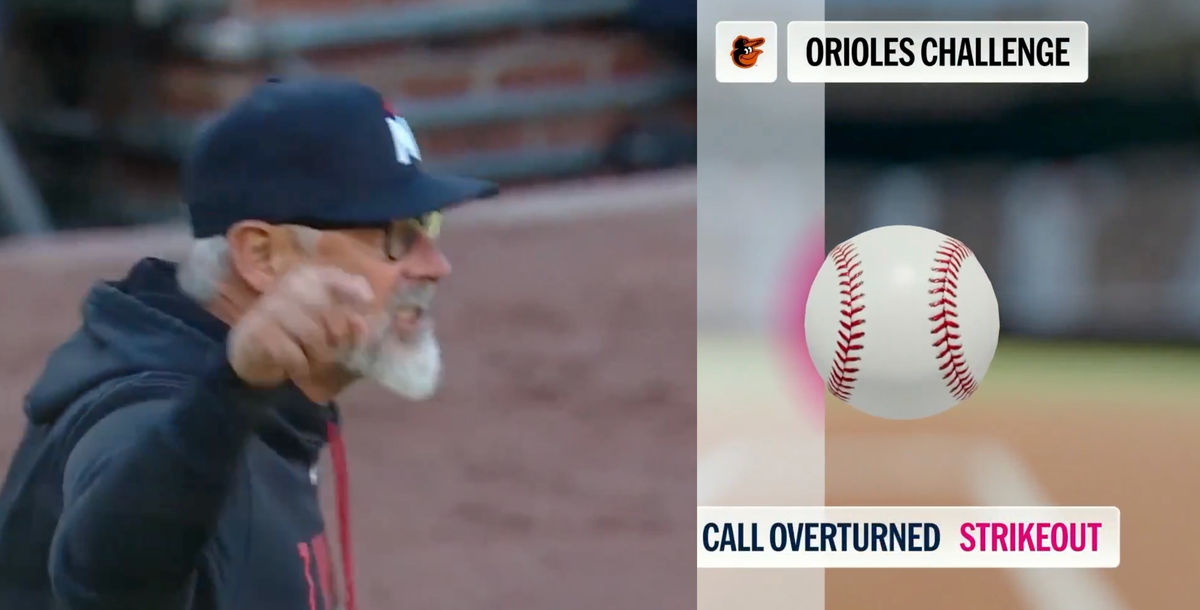
With the bases loaded and two outs in the top of the seventh inning of Sunday’s Twins-Orioles game, Twins cleanup hitter Matt Wallner watched a knee-high 3-2 pitch sail directly over the heart of the plate for strike three. Rather than accept his fate, an emotional, frustrated Wallner tapped his helmet, signaling that he was challenging an obvious strike under Major League Baseball’s new automated ball-strike challenge system. Baseball’s new AI-powered strike zone robots confirmed the call on the field, and the Twins lost the ability to challenge for the rest of the game. This very human, very emotion-driven mistake then set up a series of events resulting in the first ever manager ejection for arguing about a robot’s decision, perhaps a glimpse at the future of baseball and, if you squint, a microcosm of various human-AI beefs in society more broadly.
We are four days into the new baseball season, and this season’s brand new Automated Ball-Strike (ABS) system is the dominant storyline so far. Here’s how the system works, more or less: Like usual, a human umpire calls each pitch a ball or a strike. Immediately following that call, the pitcher, catcher, or batter can challenge the call by tapping on their head. The location of the pitch is then immediately shown on the stadium’s scoreboard on a graphic that includes each hitter’s strike zone; if the ball is within or clips any part of the strike zone box, it’s a strike. If not, it’s a ball. This all happens in a matter of seconds automatically on the Jumbotron and is driven by AI; its results are inarguable. There is no long human review process in a video booth in New York like there is for other umpire’s challenges.
And yet, the ABS system feels somehow extremely human, because human beings are making the decisions on what to challenge, under what circumstances, and how to react to any given decision. ABS is also not exactly human vs robot, it is a human player’s judgment vs a human umpire’s judgment as adjudicated by an AI system, which has made it must-watch television. Anyone who has screamed “that was a strike” at their TV now gets the satisfaction of having a player’s apparently superior judgment have actual consequences in the game. And, because the home TV broadcasts have a strikezone superimposed on the proceedings, watching from home means you can, in real time, think “they should challenge that,” or “dumb challenge.”
We are four days into the new baseball season, and this season’s brand new Automated Ball-Strike (ABS) system is the dominant storyline so far. Here’s how the system works, more or less: Like usual, a human umpire calls each pitch a ball or a strike. Immediately following that call, the pitcher, catcher, or batter can challenge the call by tapping on their head. The location of the pitch is then immediately shown on the stadium’s scoreboard on a graphic that includes each hitter’s strike zone; if the ball is within or clips any part of the strike zone box, it’s a strike. If not, it’s a ball. This all happens in a matter of seconds automatically on the Jumbotron and is driven by AI; its results are inarguable. There is no long human review process in a video booth in New York like there is for other umpire’s challenges.
And yet, the ABS system feels somehow extremely human, because human beings are making the decisions on what to challenge, under what circumstances, and how to react to any given decision. ABS is also not exactly human vs robot, it is a human player’s judgment vs a human umpire’s judgment as adjudicated by an AI system, which has made it must-watch television. Anyone who has screamed “that was a strike” at their TV now gets the satisfaction of having a player’s apparently superior judgment have actual consequences in the game. And, because the home TV broadcasts have a strikezone superimposed on the proceedings, watching from home means you can, in real time, think “they should challenge that,” or “dumb challenge.”